
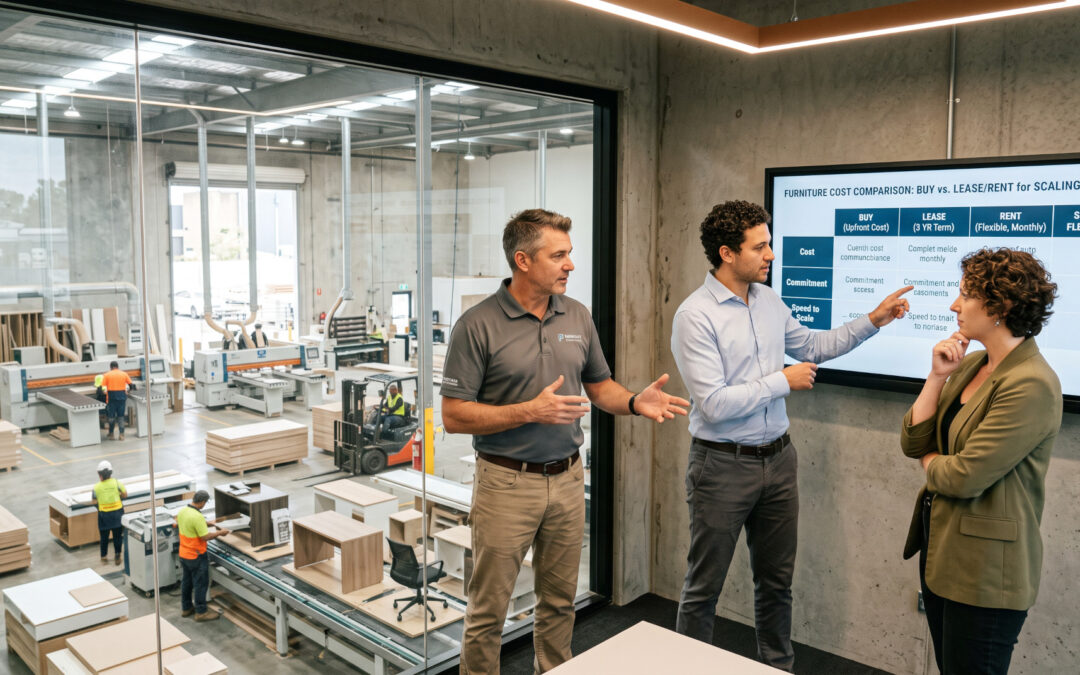
Every business fitting out an office eventually hits the same fork in the road: buy the furniture outright, or go the office furniture rental route instead. It’s a bigger decision than it looks. Furniture is one of the largest line items in any fit-out budget, and the choice between owning it and hiring it affects your cash flow, your flexibility, and how quickly you can respond when your team grows, shrinks, or moves.
Office furniture hire has grown significantly as a category in South Africa, driven largely by startups, project-based teams, and businesses that simply don’t want their capital tied up in desks and chairs. But it isn’t automatically the right answer for everyone. Here’s an honest look at where office furniture rental makes sense, where it doesn’t, and how to think through the decision properly.
What Office Furniture Rental Actually Covers
Office furniture rental, sometimes called office furniture hire or furniture leasing, typically covers the full range of workplace furniture: desks, ergonomic chairs, boardroom tables, storage units, breakout and reception furniture, and increasingly, modular systems designed for flexible, activity-based offices. Contracts usually run from a few months to several years, with delivery, installation, and often maintenance included in the agreement.
It’s used across a wide range of scenarios: a startup furnishing its first office without burning through seed funding, an established company setting up a temporary project space, a business scaling quickly and unsure of its headcount in twelve months, or a company testing a new office location before committing long-term.
The Pros of Office Furniture Rental
1. Lower Upfront Cost
This is the single biggest driver of demand for office furniture hire. Instead of a large capital outlay before you’ve even moved in, rental spreads the cost into predictable monthly payments. For startups and growing businesses, that difference can be the deciding factor between opening on time and delaying a launch while capital is raised.
2. Flexibility to Scale
Hired furniture can be added, removed, or swapped out as your headcount changes. A business that doubles in size in a year, or downsizes after a restructure, isn’t stuck with furniture that no longer fits its floor plan. This is particularly valuable for businesses in growth phases where headcount forecasts are little more than educated guesses.
3. Access to Higher-Quality Furniture
Renting often makes premium, ergonomic furniture accessible to businesses that couldn’t otherwise justify the capital cost of buying it outright. A quality ergonomic chair or a well-built height-adjustable desk carries a real price tag; hiring spreads that cost and can make a noticeably better standard of furniture affordable from day one.
4. No Long-Term Depreciation Risk
Furniture, like most physical assets, loses value the moment it’s used. Owning furniture means carrying that depreciating asset on your books and eventually dealing with disposal. With office furniture rental, that risk sits with the rental company, not your business.
5. Faster Turnaround
Rental companies typically hold stock ready to deploy, meaning a full office can often be furnished and installed faster than a custom furniture order, which may involve long manufacturing lead times, particularly for imported ranges.
6. Maintenance and Replacement Included
Most office furniture hire agreements include repairs and replacement of worn or damaged items as part of the contract, removing an ongoing maintenance burden that owned furniture doesn’t come with.
The Cons of Office Furniture Rental
1. Higher Cost Over the Long Term
This is the trade-off that matters most. Over a three-to-five-year period, the cumulative cost of renting office furniture will typically exceed the cost of buying outright. If your business has a stable, well-forecast headcount and no plans to move, buying may work out considerably cheaper over time.
2. Limited Customisation
Rental office furniture ranges are usually standardised to suit a broad range of clients, which can limit how closely your office reflects your brand identity. Bespoke joinery, custom finishes, and branded furniture pieces generally aren’t available through standard hire agreements.
3. No Asset Ownership
At the end of a rental agreement, you own nothing. For businesses that view furniture as a long-term capital asset, or that want the option to sell it down the line, hiring offers no residual value.
4. Contract Terms Can Be Restrictive
Some furniture rental agreements include minimum contract periods, early termination penalties, or restrictions on relocating or modifying items. It’s essential to read the fine print, particularly around what happens if your lease ends early or your business needs to relocate before the contract term is up.
5. Availability and Stock Limitations
Popular ranges and finishes can be limited to available stock, meaning the exact aesthetic you want may not always be available for hire, particularly for larger offices needing consistent furniture across many desks or workstations.
So, Which Is Right for Your Business?
The honest answer depends on three factors: your cash flow position, how confident you are in your headcount over the next few years, and how important bespoke, brand-matched furniture is to your office design.
- If you’re a startup or scale-up with uncertain headcount and limited capital, office furniture rental is usually the smarter starting point.
- If you’re an established business with a stable footprint and a long-term lease, buying will likely be more cost-effective over time.
- If your office design depends heavily on custom branding and bespoke finishes, buying, or a hybrid approach, generally serves that goal better than standard hire ranges.
- If you’re setting up a temporary project space or testing a new location, rental removes the risk of being left with furniture you no longer need.
Many businesses land on a hybrid model: hiring flexible, high-turnover items like desks and chairs, while purchasing statement pieces such as reception furniture or boardroom tables outright. This gets the flexibility of office furniture hire where it matters most, while still allowing key spaces to reflect a considered, branded design.
Frequently Asked Questions
Is office furniture rental cheaper than buying?
In the short to medium term, yes, largely due to the lower upfront cost. Over a longer period, typically beyond three years, buying usually works out cheaper overall, since ongoing rental payments eventually exceed the purchase price.
Can I customise rented office furniture to match my brand?
Customisation is more limited than with purchased furniture, though many rental providers offer a range of finishes and colours. If strong brand-matching is a priority, a hybrid approach of hiring standard items while purchasing branded statement pieces usually works best.
What happens if I need to end an office furniture rental contract early?
This depends entirely on the contract terms, and it’s one of the most important things to check before signing. Some agreements include early termination penalties, so it’s worth confirming this upfront if there’s any chance your headcount or location could change before the contract ends.
Does office furniture hire include delivery and installation?
Most reputable office furniture rental providers include delivery and installation as part of the agreement, along with ongoing maintenance and replacement of damaged items, though this varies by provider and should be confirmed before signing.
Is office furniture rental a good option for a small startup?
Generally yes. It keeps capital free for other priorities, allows the business to scale furniture up or down as headcount changes, and avoids the risk of being left with an office full of furniture that no longer suits a growing or restructuring team. Considering buying office furniture or renting office furniture, see the options.
