

A boardroom is far more than a meeting space. It is one of the most important environments within any office. It is where leadership teams make critical decisions, where strategies are developed, where staff collaboration takes place, and where businesses present themselves to clients, investors, and prospective partners.
When designing a modern boardroom, functionality and aesthetics must work together seamlessly. A successful boardroom should support productivity, encourage communication, and reflect the professionalism of the business. Every design decision, from the layout and furniture to the lighting and technology, contributes to the overall effectiveness of the space.
As part of a larger office fit-out or redesign, investing in a professionally designed boardroom creates long-term value for both internal operations and external business relationships.
The Importance of Boardroom Design
The boardroom often becomes the visual and operational centre of the office environment. It is usually one of the first spaces clients and visitors experience in detail, which means it contributes directly to first impressions.
A poorly designed boardroom can create discomfort, technical frustration, and a lack of engagement during meetings. In contrast, a thoughtfully designed space promotes focus, professionalism, and confidence. The environment should support productive discussions while also reflecting the standards and identity of the company.
Modern boardroom design is about creating balance. The room should feel professional without appearing cold or intimidating. It should be sophisticated while remaining practical and comfortable for everyday use.
Choosing the Right Boardroom Table
The boardroom table is the focal point of the entire space. Its size, shape, finish, and positioning influence how people interact during meetings.
Rectangular tables remain a popular choice for formal executive meetings because they create a clear sense of structure and hierarchy. Oval and round tables encourage greater collaboration and equal participation, making them suitable for more interactive meeting environments.
The table should comfortably accommodate the intended number of users without overcrowding the room. Sufficient circulation space around the table is essential to maintain comfort and accessibility.
Material selection also plays an important role. Veneers, solid wood finishes, laminates, glass, and modern composite materials all create different impressions. Premium finishes often communicate stability and professionalism, while minimalist finishes can create a more contemporary and innovative appearance.
Integrated cable management and built-in power access are now considered essential in modern boardroom tables. Technology should be easily accessible without visible clutter disrupting the clean aesthetic of the space.
Executive Seating and Comfort
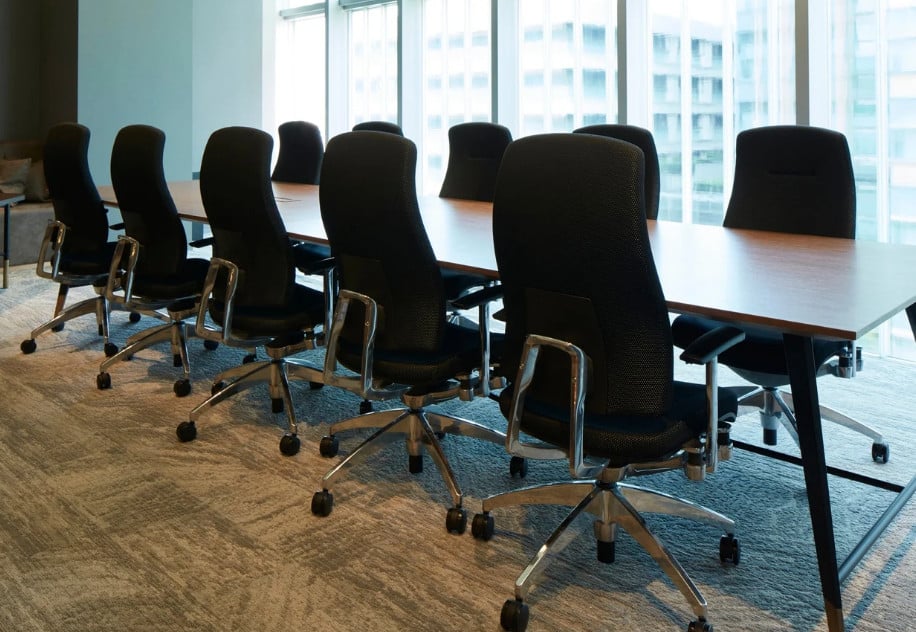
Boardroom seating directly impacts comfort, focus, and meeting productivity. Executive chairs should provide proper ergonomic support, particularly during longer meetings and presentations.
High-quality seating improves posture, reduces fatigue, and allows participants to remain engaged for extended periods. Adjustable features such as lumbar support, seat height, and armrests contribute to overall comfort and usability.
The style of the seating should also align with the overall design language of the office. Executive leather seating may suit a corporate financial environment, while modern mesh or upholstered seating may complement a contemporary creative workspace.
Consistency is important. The furniture selection should create a cohesive visual identity throughout the room while supporting practical functionality.




Boardroom Layouts and Spatial Planning
The layout of a boardroom has a significant effect on communication and collaboration. The room should be planned according to how the space will be used on a daily basis.
For formal presentations and executive discussions, a central boardroom table with screen visibility from all angles is essential. In collaborative environments, layouts that encourage interaction and participation may be more effective.
Space planning must consider circulation, accessibility, and sightlines. Participants should be able to move comfortably through the room without disruption. Clear visual access to presentation screens, video conferencing equipment, and speakers is critical.
In many modern offices, flexibility has become increasingly important. Modular furniture and adaptable layouts allow boardrooms to support multiple functions, including presentations, training sessions, workshops, and client meetings.
Technology Integration in the Modern Boardroom
Technology is now one of the most important components of boardroom design. Businesses rely heavily on virtual meetings, digital presentations, and collaborative communication tools.
A modern boardroom should include reliable video conferencing systems, high-quality audio solutions, presentation screens, wireless connectivity, and accessible power points. These elements should be integrated into the design from the beginning rather than added later as separate components.
Poorly planned technology often results in visible cables, cluttered surfaces, and operational frustration. A professionally designed boardroom ensures that technology enhances the meeting experience without dominating the space visually.
Screen placement is particularly important. Displays should be positioned for comfortable viewing from all seating areas while avoiding glare from windows or lighting.
As hybrid work environments continue to grow, boardrooms must support both in-person and remote collaboration equally effectively.
Acoustics and Sound Control
Acoustics are frequently overlooked in boardroom design, yet they have a major impact on communication quality. Poor acoustics create echo, distractions, and difficulty hearing participants clearly.
Effective sound management is especially important in spaces used for video conferencing and confidential discussions. Acoustic panels, carpeting, upholstered furniture, ceiling treatments, and soft finishes help absorb excess sound and improve speech clarity.
Sound insulation may also be necessary to reduce external office noise and maintain privacy during sensitive meetings.
A well-designed acoustic environment creates a calmer and more professional atmosphere where participants can communicate comfortably without raising their voices or repeating information.
Finishes and Material Selection
The finishes selected for a boardroom contribute significantly to the visual identity of the space. Flooring, wall treatments, ceiling finishes, furniture materials, and lighting all work together to create the overall atmosphere.
High-end finishes can communicate sophistication and professionalism, while natural materials such as timber and textured fabrics help create warmth and comfort.
Durability is also a critical consideration. Boardrooms experience regular use and should maintain their appearance over time. Materials should be selected not only for aesthetics but also for practicality and ease of maintenance.
Balanced colour palettes generally work best in professional environments. Neutral tones combined with selective accent colours often create a timeless and refined appearance.
Branding Within the Boardroom
The boardroom should align with the company’s overall brand identity and workplace culture. This does not mean overwhelming the space with logos or corporate colours, but rather creating a subtle and cohesive reflection of the business.
Branding can be incorporated through finishes, artwork, feature walls, furniture selection, and lighting design. The objective is to create a space that feels authentic to the company and reinforces its values and professionalism.
For clients and visitors, the boardroom often shapes their perception of the business. A carefully designed environment can communicate confidence, innovation, stability, and attention to detail without saying a word.
The Role of Ergonomics in Meeting Spaces
Ergonomics play a vital role in the functionality of a boardroom. Comfortable environments improve concentration, engagement, and overall meeting effectiveness.
Factors such as seating posture, table height, lighting quality, air circulation, and temperature control all contribute to user comfort. Even small design oversights can affect productivity and participant focus over time.
Ergonomic design ensures that the boardroom supports the people using it rather than creating physical discomfort or distraction during important discussions.
Conclusion
A professionally designed boardroom combines aesthetics, functionality, comfort, and technology to create a space that supports effective communication and decision-making.
From the boardroom table and executive seating to acoustics, layouts, finishes, and branding, every detail contributes to the overall success of the environment. The boardroom should not simply be viewed as another room within the office. It should be treated as a strategic business space that supports leadership, collaboration, and client engagement.
As part of a complete office redesign or fit-out, investing in quality boardroom design and furniture creates lasting value for the business while strengthening both internal culture and external perception.
